
Please Choose Your Language
Views: 0 Author: Site Editor Publish Time: 2026-04-08 Origin: Site


In recent years, the demand for Induction Hot Air Generators has increased across a range of industries. As technology advances and environmental concerns become more pressing, companies are searching for energy-efficient, reliable, and eco-friendly solutions to replace conventional heating methods. Induction hot air generators have emerged as one of the most popular alternatives, offering significant advantages in both performance and sustainability. At Guangdong Jiangxin Electronic Technology Co., Ltd., we specialize in providing high-quality induction heating equipment, including hot air generators, that cater to the growing needs of industrial applications. This article will explore why these generators are gaining traction and how they are transforming industries by offering cost-effective and environmentally friendly solutions.
Induction heating technology has long been recognized for its precision and efficiency in various applications, but now, with the rise of Induction Hot Air Generators, this technology is making waves in sectors that require rapid and uniform heating. Whether it’s for drying, curing, or heating materials, the ability to generate hot air quickly and efficiently has made induction-based systems a sought-after solution in manufacturing, food processing, textiles, and more.
As global industries continue to seek ways to optimize energy consumption and reduce carbon footprints, energy-efficient heating methods have become a priority. Traditional heating systems often rely on combustion or electrical resistance, both of which can be wasteful in terms of energy and time. In contrast, Induction Hot Air Generators operate on the principle of electromagnetic induction, a highly efficient process that generates heat directly within the material being heated, rather than relying on external heating elements or fuels.
This direct energy transfer allows induction systems to achieve higher efficiency, faster heating, and more precise temperature control, making them ideal for a wide range of industrial applications. As energy costs rise and environmental regulations become more stringent, businesses are turning to induction heating technologies as a more sustainable and cost-effective alternative to conventional methods.
Induction hot air generators represent a modern and highly efficient method of heating that uses electromagnetic induction to generate heat. The process relies on the creation of an electromagnetic field that induces an electric current, also known as an eddy current, directly within the material being heated. This current produces heat within the material itself, rather than relying on direct contact with a heating element, which significantly improves efficiency.
The process is particularly effective for generating hot air because it allows for precise control over both the temperature and distribution of heat. The induction coils are specifically designed to generate hot air in a controlled and consistent manner, which is ideal for a variety of applications, including drying, curing, and heating in different industrial processes. Whether used in manufacturing, food processing, or electronics, induction hot air generators offer several advantages that traditional heating methods cannot match.
Key Features of Induction Hot Air Generators:
· Rapid Heating: Induction hot air generators are known for their quick heat-up times. This makes them ideal for industries where fast processing times are essential, such as in drying or curing applications.
· Energy Efficiency: These systems use energy more efficiently compared to conventional methods. Since the heat is directly generated within the material itself, less energy is wasted, resulting in lower operational costs and a smaller environmental footprint.
· Precision and Control: Induction heating offers highly accurate temperature control, which ensures uniform heating across the material. This level of precision is essential in applications where consistent and reliable results are required.
· Environmentally Friendly: Induction hot air generators produce less waste heat and reduce reliance on fossil fuels, which makes them a more eco-friendly option for businesses looking to lower their carbon footprint.
Overall, induction hot air generators provide a powerful, efficient, and sustainable solution for industries looking to optimize their heating processes.
Induction Hot Air Generators have found applications across multiple industries due to their versatility, efficiency, and environmental benefits. Some of the sectors that are benefiting the most from this technology include:
In manufacturing, precise heating is essential for many processes, such as curing coatings, drying paints, and forming materials. Induction hot air generators are capable of providing the rapid and consistent heating required for these processes, improving production speeds and product quality.
For example, in the metalworking industry, induction heating is used for processes like hardening, tempering, and brazing. Similarly, in the automotive sector, induction heating is employed for curing coatings and drying paints, providing a faster and more efficient alternative to traditional ovens.
The food industry has also embraced induction hot air generators for applications such as drying, roasting, and cooking. Induction heating provides precise and controlled temperatures, allowing for faster processing times without compromising product quality. It is especially useful for drying food products such as fruits, vegetables, and meats, where uniform heating is crucial to preserving nutrients and taste.
In the textile industry, induction hot air generators are used for drying fabrics and curing dyes. These systems provide a more efficient and faster alternative to conventional drying methods, reducing energy consumption while improving throughput. They also help prevent damage to delicate fabrics, ensuring that the final product is of the highest quality.
Induction heating is used in electronics manufacturing for soldering and component curing. It is particularly beneficial in precision applications where the controlled application of heat is essential to prevent damage to sensitive components. Induction hot air generators provide a reliable, efficient, and fast heating solution for these delicate processes.
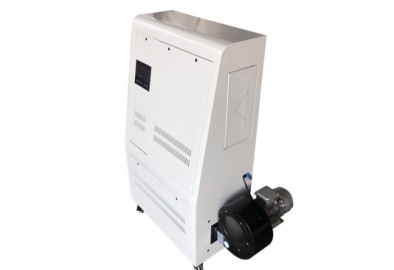
Induction hot air generators offer several advantages over traditional heating methods, making them a preferred choice for many industries. Below are some of the key benefits:
Traditional heating methods often rely on external heating elements or combustion, both of which can be inefficient and wasteful. Induction heating, on the other hand, generates heat directly within the material being processed, minimizing energy loss and maximizing efficiency. This leads to significant energy savings over time, especially in industries with high heating requirements.
Induction hot air generators heat materials much faster than conventional methods. This is particularly important in industries where time is of the essence, such as food processing or manufacturing. Faster heating times translate to increased productivity and reduced operational costs.
One of the standout features of induction heating is the ability to precisely control the temperature and heating rate. This level of control ensures that materials are heated uniformly and to the exact temperature required, reducing the risk of overheating or underheating.
As industries increasingly look for ways to reduce their environmental impact, induction hot air generators offer a more sustainable alternative to traditional heating methods. By reducing energy consumption and eliminating the need for fossil fuels, these generators contribute to a greener, more eco-friendly manufacturing process.
Feature | Traditional Heating Methods | Induction Hot Air Generators |
Heating Speed | Slower | Faster |
Energy Efficiency | Lower | Higher |
Precision | Less Control | High Control |
Environmental Impact | Higher Energy Consumption | Lower Energy Consumption |
Maintenance Requirements | High | Low |
Induction Hot Air Generators are rapidly gaining popularity across various industries due to their superior energy efficiency, fast heating capabilities, and environmental benefits. As industries strive to improve productivity while reducing operational costs, these generators offer an ideal solution for applications that require precise and rapid heating. At Guangdong Jiangxin Electronic Technology Co., Ltd., we are proud to provide advanced induction heating solutions that cater to the growing demand for sustainable and efficient technologies.
By incorporating induction hot air generators into your operations, you can achieve faster processing times, energy savings, and enhanced control over heating processes, ultimately improving your product quality and bottom line. To learn more about our products and how they can benefit your operations, please contact us today.
1. What is the advantage of using Induction Hot Air Generators over traditional heating systems?
Induction hot air generators are more energy-efficient, provide faster heating, and offer better precision compared to traditional heating methods, resulting in reduced operational costs and faster processing times.
2. Which industries use Induction Hot Air Generators?
Induction hot air generators are used in industries such as manufacturing, food processing, textile production, and electronics, where precise and rapid heating is required for processes like drying, curing, and soldering.
3. How do Induction Hot Air Generators save energy?
Induction heating directly generates heat within the material being processed, eliminating energy loss that typically occurs with traditional heating methods, thus making the process more energy-efficient.
4. Can Induction Hot Air Generators handle large-scale industrial applications?
Yes, induction hot air generators are designed to handle both small-scale and large-scale industrial applications, offering scalable solutions for various production needs.


