
Please Choose Your Language
Views: 0 Author: Site Editor Publish Time: 2025-07-16 Origin: Site


In the realm of modern heating technologies, the induction heating coil stands out as a revolutionary component. It has transformed industrial processes by providing efficient, precise, and rapid heating solutions. But what exactly is an induction heating coil, and how does it function? This article delves deep into the concept, exploring its principles, applications, and the science behind its efficiency.
To understand the induction heating coil, it's imperative to grasp the fundamental principles of induction heating itself. Induction heating is a non-contact method of heating electrically conductive materials. It operates on the principle of electromagnetic induction, where an alternating current passes through a coil, generating a magnetic field that induces eddy currents within the material to be heated. These eddy currents circulate within the material, producing heat due to its electrical resistance.
Electromagnetic induction, discovered by Michael Faraday in 1831, is the production of an electromotive force across an electrical conductor in a changing magnetic field. Faraday's law states that the induced voltage in a circuit is proportional to the rate of change over time of the magnetic flux through that circuit. In the context of induction heating, this means that a changing magnetic field in the induction coil induces an electric current in the conductive material placed within it.
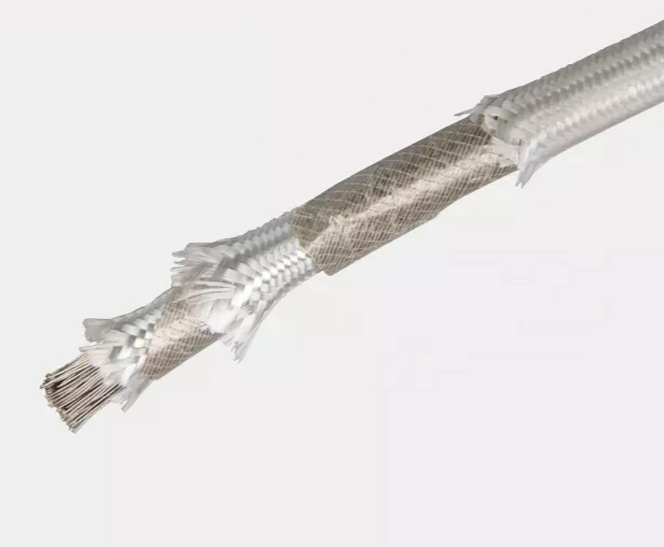
An induction heating coil is essentially a coil of wire, typically made from copper due to its excellent electrical conductivity. The coil is designed to carry high-frequency alternating current. The geometry of the coil can vary based on the application, ranging from helical coils for cylindrical objects to pancake coils for flat surfaces.
The design of the induction heating coil is critical for efficient heating. Key factors include:
Coil Geometry: The shape of the coil affects the distribution of the magnetic field. Customizing the coil to match the workpiece ensures uniform heating.
Number of Turns: Increasing the number of turns can enhance the magnetic field strength, but may also require adjustments in power and frequency.
Coil Efficiency: Optimizing the spacing between the coil and the workpiece minimizes energy losses and improves heating efficiency.
When alternating current flows through the induction coil, it generates a time-varying magnetic field. This magnetic field penetrates the conductive material placed within the coil, inducing eddy currents. The resistance of the material to these currents causes localized heating without any physical contact between the coil and the material.
A notable phenomenon in induction heating is the skin effect, where the induced currents tend to flow near the surface of the conductor at high frequencies. This effect is advantageous for surface hardening processes in metals, as it allows for precise heating of the outer layer without affecting the core.
Induction heating coils are utilized across various industries due to their efficiency and precision. Some common applications include:
 Metallurgical Processes
In metallurgy, induction heating is employed for processes like hardening, annealing, tempering, and forging. The ability to control heating parameters precisely results in superior material properties and energy savings.
The medical industry utilizes induction heating for the manufacturing of devices requiring strict hygiene and precision, such as surgical instruments and implants. The non-contact heating method reduces contamination risks.
In automotive manufacturing, induction heating coils are used for processes like gear hardening, shrink fitting, and brazing. The fast and consistent heating improves production efficiency and product quality.
The widespread use of induction heating coils is attributed to several key advantages:
Induction heating is highly energy-efficient as it directly heats the material without intermediary steps. Studies have shown energy savings of up to 30% compared to conventional heating methods.
The ability to control the heating parameters precisely allows for uniform heating and reduces the risk of material defects. This precision is crucial in applications requiring tight tolerances.
Since there's no open flame or contact with heating elements, induction heating reduces safety hazards and contamination risks. It also contributes to a cleaner working environment by eliminating combustion by-products.
When designing an induction heating system, several factors must be considered to ensure optimal performance:
Operating frequency impacts the penetration depth of the induced currents. Higher frequencies result in shallower penetration, suitable for surface heating, while lower frequencies allow deeper heating.
The power level must be adequate to achieve the desired heating rate without causing thermal stress. Calculating the appropriate power involves considering the material properties and the heating application.
Induction coils can generate significant heat and may require cooling systems to maintain performance. Water cooling is commonly used to dissipate excess heat from the coil.
Materials with high electrical conductivity and magnetic permeability respond well to induction heating. Ferrous metals like steel and iron are ideal candidates due to their magnetic properties.
Non-ferrous metals such as copper and aluminum can also be heated, though higher frequencies may be necessary due to their lower resistivity and lack of magnetic permeability.
While primarily used for metals, induction heating can be applied to semiconductors and certain non-metallic materials with appropriate system adjustments, expanding its application range.
Despite its advantages, induction heating presents challenges such as initial setup costs and the need for specialized equipment. However, these can be mitigated through careful system design and by leveraging advancements in technology.
Modern induction heating systems incorporate smart technology, allowing for automated control and monitoring. This enhances efficiency and reduces the need for manual intervention.
While the initial investment may be higher compared to traditional heating methods, the long-term benefits such as energy savings, improved quality, and increased production rates offer a significant return on investment.
Induction heating is considered environmentally friendly due to its high efficiency and lack of direct emissions. It supports sustainability initiatives by reducing energy consumption and minimizing waste.
Industries adopting induction heating can significantly lower their carbon footprint. The elimination of fossil fuels in the heating process contributes to cleaner production practices.
As environmental regulations become stricter, induction heating provides a viable solution for companies aiming to comply with legal requirements while maintaining efficiency.
The future of induction heating coils is poised for growth, with trends focusing on enhanced efficiency, integration with renewable energy sources, and expanded applications.
The integration of induction heating systems with IoT devices allows for real-time monitoring and optimization, leading to smarter manufacturing processes.
Ongoing research is expanding the capabilities of induction heating, including its application to new materials and processes, further solidifying its role in advanced manufacturing.
The induction heating coil is a cornerstone technology in modern industrial heating applications. Its ability to provide efficient, precise, and clean heating solutions makes it indispensable across various sectors. As industries continue to seek sustainable and cost-effective methods, induction heating coils will undoubtedly play a pivotal role in shaping the future of manufacturing and processing.


