
Please Choose Your Language
Views: 0 Author: Site Editor Publish Time: 2025-07-16 Origin: Site


Induction heating technology has become a cornerstone in modern industrial applications due to its efficiency, precision, and control. At the heart of this technology lies the induction heating coil, a vital component responsible for generating heat through electromagnetic induction. Understanding how an induction heating coil works is essential for engineers, technicians, and researchers aiming to optimize heating processes across various industries, including manufacturing, metallurgy, and medical equipment. This article delves into the fundamental principles, design considerations, and applications of induction heating coils, providing a comprehensive analysis backed by theoretical insights and practical examples.
Induction heating is a non-contact heating process that utilizes the principles of electromagnetic induction to produce heat within a conductive material. The basic concept involves generating an alternating magnetic field using an induction coil powered by an alternating current (AC) source. When a conductive material, often referred to as the workpiece, is placed within this magnetic field, electric currents known as eddy currents are induced within it. These currents flow against the electrical resistivity of the material, generating localized heat without any physical contact between the coil and the workpiece.
This heating method offers several advantages over traditional heating techniques. It provides rapid heating rates, precise temperature control, and uniform heat distribution, making it ideal for applications requiring high efficiency and minimal energy loss. The underlying physics involves Maxwell's equations, which describe how electric and magnetic fields interact to induce current and, consequently, heat within the material.
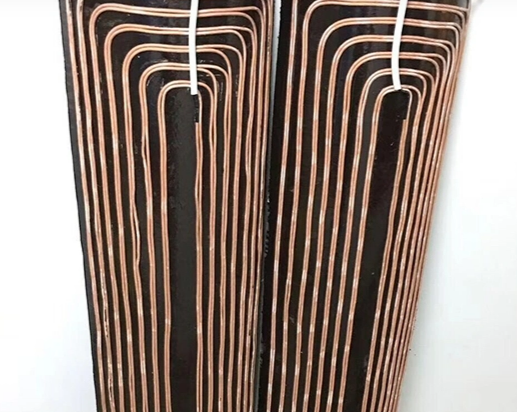 The design of an induction heating coil is critical to the efficiency and effectiveness of the heating process. The coil must be tailored to the specific application, taking into account factors such as the shape and size of the workpiece, the desired heating depth, and the frequency of the AC power source. Common coil designs include helical coils, pancake coils, and multi-turn coils, each suited for different types of heating tasks.
Coil geometry directly influences the magnetic field distribution and, therefore, the heating pattern within the workpiece. For instance, a tightly wound helical coil is suitable for heating cylindrical objects uniformly along their length, while a pancake coil is ideal for heating flat surfaces. Material selection for the coil is also crucial; copper is commonly used due to its high electrical conductivity, which minimizes resistive losses in the coil itself.
The frequency of the AC power supply plays a significant role in induction heating. Higher frequencies result in shallower heat penetration due to the skin effect, where induced currents are concentrated near the surface of the workpiece. Conversely, lower frequencies allow for deeper heat penetration, which is beneficial for heating thicker materials. Selecting the appropriate frequency is essential for achieving the desired heating characteristics and energy efficiency.
For applications requiring surface hardening, high frequencies ranging from 100 kHz to 400 kHz are typically used. For bulk heating processes, such as melting or forging, lower frequencies between 50 Hz and 10 kHz are more appropriate. Advanced induction heating systems often feature adjustable frequency controls to accommodate a wide range of materials and heating requirements.
Efficient induction heating requires careful consideration of both thermal and electrical factors. The electrical efficiency of the system is influenced by coil design, including the number of turns and the spacing between them. Thermal efficiency depends on the coupling between the coil and the workpiece, as well as the electrical conductivity and magnetic permeability of the material being heated.
Materials with high magnetic permeability, such as iron and steel, respond more readily to induction heating due to the increased induction of eddy currents and hysteresis losses within the material. Non-magnetic materials like copper and aluminum can also be heated using induction, but they require higher power levels and frequencies to achieve the same heating effect.
Induction heating coils are utilized in a wide array of industrial applications. In the automotive industry, they are employed for hardening crankshafts, gears, and other components to improve wear resistance. In the aerospace sector, induction heating is used for brazing and welding critical components with high precision. The medical device industry leverages induction coils for sterilization processes and in equipment like MRI machines.
Moreover, induction heating is integral to processes such as annealing, shrink fitting, and metal melting. Its ability to provide controlled and localized heating makes it ideal for applications where traditional heating methods are inefficient or impractical. For specialized applications, custom-designed induction heating coils are essential to meet specific process requirements. Companies offering tailored solutions, such as customized induction heating coils, play a pivotal role in advancing industrial heating technologies.
Recent advancements have focused on improving the efficiency and versatility of induction heating systems. Developments in power electronics have led to the creation of more compact and efficient power supplies, capable of delivering high-frequency currents with precise control. Innovations in coil design, such as litz wire coils and integrated cooling systems, have enhanced performance by reducing losses and managing thermal loads effectively.
Computer-aided design (CAD) and simulation tools now allow engineers to model electromagnetic fields and thermal profiles accurately, optimizing coil designs before physical prototypes are built. This integration of digital technologies accelerates development cycles and leads to more efficient heating solutions tailored to complex industrial needs.
Induction heating is inherently more energy-efficient than conventional heating methods because it directly transfers energy to the workpiece with minimal heat loss to the surroundings. This efficiency reduces operational costs and contributes to lower carbon emissions. Industries are increasingly adopting induction heating as part of their sustainability initiatives, recognizing its role in reducing the environmental impact of manufacturing processes.
Furthermore, induction heating systems eliminate the need for combustion-based heating, thereby reducing the release of pollutants and enhancing workplace safety by minimizing exposure to open flames and hot surfaces.
Implementing induction heating requires careful planning and consideration of several practical aspects. System integration must account for the power supply, cooling requirements, and control mechanisms. The selection of the appropriate induction heating coil is paramount; factors such as coil shape, size, and material directly influence the heating efficiency and uniformity.
Maintenance is another critical consideration. Induction coils can experience wear due to thermal cycling and mechanical stresses. Regular inspection and maintenance procedures are essential to ensure longevity and consistent performance. Advances in coil manufacturing, such as the use of high-temperature insulation materials and robust construction techniques, have improved the durability of induction heating coils.
Several case studies illustrate the effectiveness of induction heating coils in industrial processes. In one instance, a manufacturing company specializing in automotive parts reduced their energy consumption by 30% after switching to induction heating for gear hardening. The precise control offered by induction heating coils allowed for uniform hardness and improved product quality.
Another example involves a metal forging operation where induction heating replaced traditional gas-fired furnaces. The company achieved faster heating times and increased production rates, while also reducing greenhouse gas emissions. The utilization of advanced induction heating coil designs was instrumental in customizing the heating process to the specific shapes and sizes of their products.
Looking ahead, the integration of smart technologies and automation is set to transform induction heating applications. The development of intelligent induction heating systems equipped with sensors and real-time monitoring capabilities enables predictive maintenance and enhances process control. Artificial intelligence and machine learning algorithms can optimize heating cycles, adjust parameters dynamically, and improve overall system efficiency.
In addition, research into new materials and coil designs promises to expand the capabilities of induction heating. Superconducting coils, for example, could drastically reduce energy losses and allow for higher power densities. These advancements will open up new possibilities in sectors ranging from advanced manufacturing to healthcare.
The induction heating coil is a fundamental component that enables the efficient and precise heating capabilities of induction systems. A deep understanding of how these coils work is essential for optimizing industrial processes and harnessing the full benefits of induction heating technology. Continued innovation in coil design, materials, and integration with digital technologies will further enhance their performance and expand their applications.
As industries strive for greater efficiency and sustainability, the role of induction heating coils becomes increasingly significant. Companies specializing in these technologies, such as providers of high-quality induction heating coils, are at the forefront of this evolution, driving advancements that benefit a wide range of sectors. Embracing these innovations will be critical for businesses aiming to improve their processes, reduce environmental impact, and stay competitive in a rapidly changing technological landscape.


