
Please Choose Your Language
Views: 0 Author: Site Editor Publish Time: 2025-12-11 Origin: Site


In the world of industrial heating, traditional methods such as combustion, resistance heating, and ovens have long been the go-to solutions. However, these methods are often inefficient, energy-intensive, and incapable of providing the precision that modern industries demand. As technology evolves, the industrial sector is increasingly turning to induction heaters to meet the growing need for energy-efficient and precise heating solutions. JONSON, a trusted name in electromagnetic induction heating, offers a range of high-frequency induction heaters that provide rapid, uniform heating while significantly reducing energy consumption.
Induction heating works through the principle of electromagnetic induction, where alternating current passes through a coil to create a changing magnetic field, inducing heat directly within the material. This process eliminates the need for direct contact, unlike traditional heating methods that rely on heat conduction from external sources. By understanding how induction heaters work and the distinct advantages they offer, industries can make the shift to this innovative and eco-friendly technology.
The Principle of Electromagnetic Induction
At the core of induction heating is the principle of electromagnetic induction. An induction heater generates heat by passing an alternating current through a coil. This generates a changing magnetic field, which induces electric currents (known as eddy currents) within the conductive material being heated. These eddy currents create resistance, and the resistance leads to heat generation. This process is extremely efficient because the material itself becomes the heating source, rather than relying on external heat sources such as flames or ovens.
Why Only Conductive Materials?
Induction heating works best with conductive materials, predominantly metals. Ferrous metals such as steel, as well as non-ferrous metals like copper and aluminum, are excellent candidates for induction heating. Since the process relies on generating eddy currents within the material, only conductive materials can effectively generate heat. Non-conductive materials, such as plastics or ceramics, require additional modifications or special designs to be heated efficiently using induction.
What Makes Induction Heating Different from Traditional Heating?
One of the biggest advantages of induction heaters is the fact that they provide non-contact, internal heating. Unlike traditional heating methods, which require direct contact with the heating element or the use of flames, induction heating works by inducing heat directly inside the material itself. This provides several benefits:
Faster and more efficient heating, as energy is directly converted into heat within the material.
No open flame, reducing the risk of fire hazards and improving safety.
More uniform heating, reducing the potential for material distortion or damage.
Energy efficiency, as it generates minimal heat loss compared to external heating sources.
Energy Efficiency and Cost Savings
Induction heating is far more energy-efficient than traditional methods. Up to 90% of the electrical energy used in induction heating is converted directly into heat, with little wasted energy. In contrast, conventional heating methods like ovens and flame-based heating systems can have energy conversion rates as low as 50%, meaning a lot of energy is lost to the environment. This high energy efficiency results in significant cost savings for industries, especially in high-volume applications.
Speed and Rapid Heating
Induction heaters can heat metals much faster than conventional methods. The process is nearly instantaneous, allowing for rapid heating times and increased throughput in manufacturing processes. For example, in metal hardening or forging applications, induction heating can heat the material to the desired temperature in a fraction of the time compared to traditional furnaces or flame-based heating.
Precision and Localized Heating
One of the most remarkable benefits of induction heaters is their precision. Induction heating can be precisely controlled to target specific areas of a metal object. This allows for localized heating, meaning only the part of the material that requires heat is heated, leaving the rest of the object unaffected. This is particularly advantageous in processes like hardening, brazing, and shrink fitting, where precise heat application is critical to achieving the desired results.
Safety and Environmental Benefits
Induction heating offers significant safety and environmental benefits. Unlike traditional methods, induction heating does not produce harmful byproducts such as smoke, gases, or waste heat. It also eliminates the need for open flames or combustion, which can be hazardous in industrial environments. Moreover, induction heaters operate with little noise, improving working conditions and reducing environmental impact.
Consistent Quality and Process Repeatability
Induction heaters provide consistent and repeatable results, which is vital in industrial applications. Because the process is highly controlled and energy-efficient, induction heating ensures that the heated materials maintain a consistent quality, whether the application is metal hardening, brazing, or other processes. This repeatability ensures that each product meets the required standards and helps avoid material defects or inconsistencies.
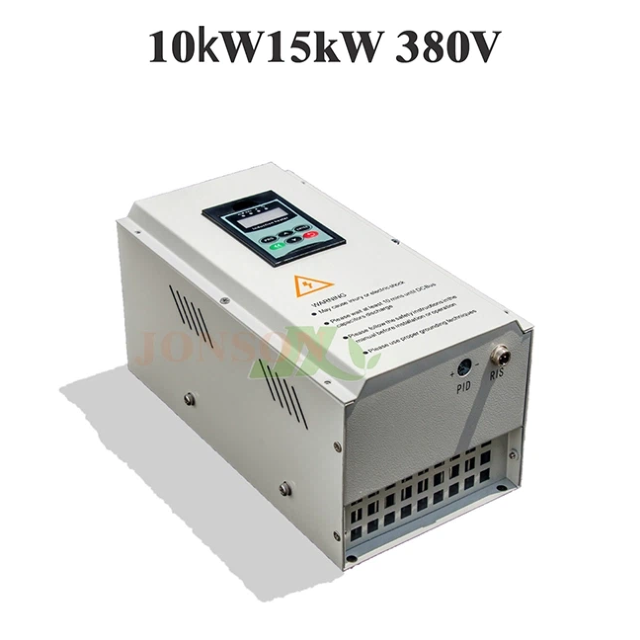
Induction heaters have a broad range of industrial applications, thanks to their versatility and efficiency. Some of the most common uses include:
Metal Hardening, Tempering, and Annealing: Induction heating is widely used for hardening metal parts such as gears, shafts, and bearings. By heating specific areas of the metal to high temperatures and then cooling them rapidly, induction heating increases the hardness and durability of the metal.
Brazing and Soldering: Induction heating is ideal for brazing and soldering metal components. The precise and controlled heating of joints ensures strong, reliable bonds, which are critical in industries like automotive and aerospace manufacturing.
Forging and Shrink Fitting: Induction heating is used in forging processes to soften metal parts for easier shaping. Similarly, shrink fitting is another application where induction heating is used to expand or contract metal components for assembly.
Melting and Casting: Induction heaters are commonly used in foundries and steel mills for melting metals. The high temperatures generated by induction heaters make them perfect for the efficient melting and casting of both ferrous and non-ferrous metals.
Plastic Processing and Molding: In certain industrial contexts, induction heating is used for plastic processing and molding, particularly when a conductive susceptor or special barrel is used to transfer heat to the material.
JONSON offers a range of high-quality induction heaters designed for a variety of industrial applications. Our product line includes high-frequency induction heaters, induction water heaters, steam generators, custom coils, and control boards. Here’s why you should choose JONSON’s induction heaters for your business:
Precision and Uniform Heating: Our induction heaters are engineered for precise and uniform heating, ensuring consistent results every time.
Energy Savings: With our energy-efficient technology, you can significantly reduce your energy consumption, leading to lower operational costs.
Customizable Solutions: We offer flexible and customizable solutions, allowing our products to be tailored to meet the specific needs of various industrial applications, from metal processing to plastic molding.
Long-Term Cost Efficiency: By reducing downtime, improving productivity, and enhancing the lifespan of your equipment, JONSON’s induction heaters offer long-term cost savings for your business.
Before investing in an induction heater, it’s essential to consider several factors to ensure optimal performance and efficiency:
Material Compatibility: Induction heating works best with conductive materials such as metals. If you plan to use induction heaters for non-conductive materials, special designs or modifications may be required.
Coil Design and Matching: The design of the induction coil is crucial to achieving optimal results. The coil’s size, shape, and power requirements should be carefully matched to the material and the heating needs.
Maintenance and Safety Measures: While induction heaters do not involve open flames, it’s still important to ensure the proper maintenance of coils, insulation, and temperature control systems to prevent overheating or malfunction.
Application Scope vs Limitation: Induction heating is ideal for a wide range of applications, but for larger, more complex components, specialized solutions may be needed.
Induction heaters represent the future of industrial heating due to their energy efficiency, precision, and safety. By adopting this cutting-edge technology, industries can significantly reduce energy consumption, improve product quality, and enhance productivity. JONSON’s induction heaters offer reliable, cost-effective solutions for a variety of applications, making them an essential tool for modern manufacturing processes.
If you're ready to make the switch to induction heating, contact us at JONSON today to learn more about our range of products and how we can help optimize your industrial heating processes.
Q1: What are the main benefits of using induction heaters in manufacturing?
A1: Induction heaters offer precise, efficient, and fast heating, which reduces energy consumption, improves product quality, and ensures consistent results across different processes.
Q2: Can induction heaters be used for both metal and plastic materials?
A2: While induction heating is best suited for metals, certain designs and modifications can make it effective for plastic processing as well.
Q3: How does induction heating compare to traditional flame heating methods?
A3: Unlike flame-based heating, induction heating provides non-contact, internal heating, which is more energy-efficient, safer, and offers more control over the heating process.
Q4: What industries benefit most from induction heating?
A4: Industries such as automotive, aerospace, metalworking, and plastics manufacturing can all benefit from the high efficiency, precision, and versatility of induction heating.


