
Please Choose Your Language
Views: 0 Author: Site Editor Publish Time: 2025-12-10 Origin: Site


Choosing the right induction steam generator model is crucial for businesses seeking to optimize energy efficiency, minimize operational costs, and meet their specific steam production needs. The size and capacity of the generator will have a direct impact on the system's performance, maintenance requirements, and overall operational success. With different industries having varying steam demands, the importance of selecting the right induction steam generator capacity cannot be overstated. This guide will help you understand the key factors that determine the right model for your business, ensuring that your investment in steam generation provides the best value and performance.
When choosing an induction steam generator for your business, there are several important factors to consider. These factors will help ensure that the generator you select is perfectly suited to your business's operational requirements.
The first and most important factor to consider is your steam demand. Different industries require varying amounts of steam, depending on the volume of production, the duration of steam use, and the frequency of demand. For example, a small spa may need intermittent steam for short periods, while a large food processing plant may require continuous, high-volume steam.
Small-scale / intermittent demand: For businesses with sporadic steam usage, such as spas, hotels, or laboratories, a smaller capacity generator (3.5 kW to 5 kW) is often sufficient.
Continuous or medium-scale demand: Industries like food processing, textiles, and sterilization that need a steady supply of steam can benefit from a mid-range generator (6 kW to 7 kW).
High-demand / large-scale use: For large-scale operations or central heating systems that require consistent high-volume steam, a higher capacity model (8 kW or above) will be needed to meet demand.
Understanding your steam usage pattern is essential in determining the right size of the induction steam generator.
The space available for installing your induction steam generator plays a critical role in selecting the appropriate model. Many industrial facilities are already operating in limited space, and traditional steam boilers with large footprints may not fit or may require significant modifications to the building.
Induction steam generators are compact and modular in design, making them ideal for environments with space limitations. By choosing a model that suits the available space, you can optimize the layout of your facility without sacrificing the quality and efficiency of steam production.
It’s important to assess the available power supply in your facility before choosing a steam generator. Induction steam generators come in different power configurations, typically single-phase or three-phase power.
Single-phase systems are often suitable for smaller businesses or locations with lower energy demands.
Three-phase systems are more appropriate for larger industrial applications that require continuous, high-volume steam.
Ensure that the generator you select is compatible with the electrical supply available at your site to avoid any installation issues or added costs.
Different industries have specific requirements for steam quality, temperature control, and even emissions standards. For example:
Food Processing: This industry often requires precise steam control for cooking, sterilizing, and drying. A stable, high-efficiency steam generator is essential.
Textile Industry: Steam plays a key role in dyeing and finishing fabrics. A generator with stable temperature and pressure control is vital.
Hotel / Spa: Intermittent steam use for heating or therapeutic purposes requires a smaller, on-demand steam generator.
Central Heating Systems: Larger facilities may require an induction steam generator that can integrate with water heaters or other heating systems to provide both steam and hot water efficiently.
Understanding the unique needs of your industry will help you select a generator that meets your specific steam production requirements.
Some businesses prefer steam generators that require minimal maintenance and have high reliability, while others may be able to allocate more resources to maintenance. Choosing the right model also depends on your ability to maintain the system.
Low-maintenance design: If your business is looking for a generator that requires minimal upkeep, consider models with fewer moving parts and simpler designs.
High-reliability models: For businesses that prioritize uptime and cannot afford to experience frequent breakdowns, investing in higher-reliability models with advanced control systems can be beneficial.
By evaluating your capacity for maintenance and desired operational convenience, you can select a generator that matches your operational workflow.
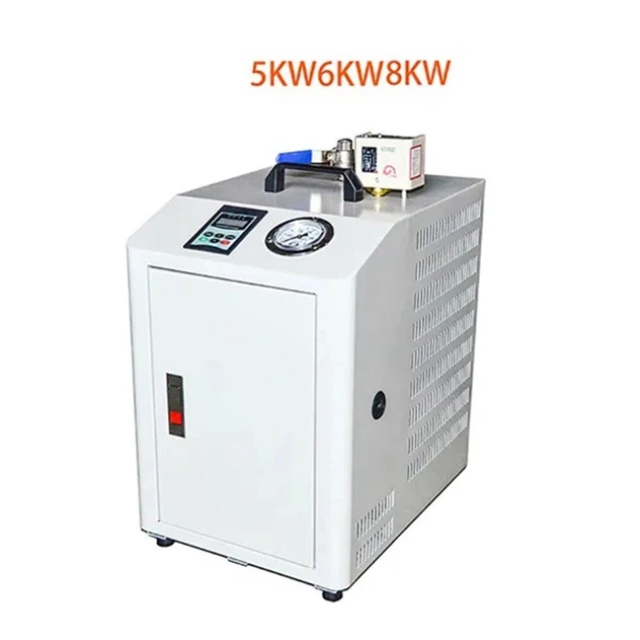
Based on your steam demand, space constraints, and industry requirements, here are some recommended models from JONSON’s induction steam generator lineup:
For small businesses or applications where steam is required intermittently or for short durations, the 3.5 kW to 5 kW models are ideal. These models offer:
Compact design for installations with space constraints.
Energy-efficient operation, minimizing energy consumption during short bursts of steam demand.
Perfect for applications such as spas, small hotels, and laboratories.
For industries like food processing, textile production, or sterilization that require a continuous supply of steam, the 6 kW to 7 kW models are recommended. These models provide:
Higher capacity for consistent steam generation during extended operational hours.
Energy-efficient features that reduce operational costs over time.
Excellent for environments where steam production is required on a daily basis.
In industries that demand large-scale steam generation, such as central heating systems or large manufacturing plants, the 8 kW and higher models are the best choice. These systems offer:
High capacity to meet the needs of large operations.
Integration with induction water heaters or boilers for simultaneous hot water and steam generation.
Ideal for large facilities or those requiring constant, high-volume steam.
For businesses that wish to retrofit their existing systems with a more energy-efficient solution, JONSON’s compact induction steam generators are a great option. These models can be integrated with existing infrastructure, offering a space-saving solution that reduces energy consumption while improving performance.
Selecting the correct capacity is essential for ensuring optimal performance. Both over-sizing and under-sizing an induction steam generator can lead to issues that may affect your business operations:
Inadequate steam supply: An under-sized generator will struggle to meet demand, resulting in insufficient steam production.
Frequent overloading: Overloading the system can cause the generator to wear out faster, leading to higher maintenance costs and a shorter lifespan.
Higher upfront costs: Larger capacity generators come with higher initial costs, both in terms of purchase price and installation.
Energy wastage: Over-sized systems can lead to energy waste during idle periods, as the generator may consume more energy than necessary.
Underutilization of space: An over-sized generator will take up valuable space that could be better utilized for other operations.
If the supply and demand patterns of steam generation are mismatched—such as selecting a generator designed for intermittent use for a facility with continuous steam requirements—this can lead to inefficiency and poor system performance. Selecting a generator that matches your usage pattern is crucial for maintaining stable, cost-effective steam production.
To determine the right induction steam generator for your business, follow these steps:
Calculate Average and Peak Steam Demand: Assess your steam needs in terms of volume per hour, duration, and duty cycle.
Assess Available Installation Space and Power Supply: Ensure the system fits within your available space and is compatible with your facility’s electrical capacity.
Determine Required Steam Quality: Identify the steam quality required for your operations, including pressure, dryness, and temperature stability.
Consider Maintenance Resources: Evaluate the level of maintenance support your business can provide and choose a model that aligns with your maintenance capacity.
Match These Factors with JONSON’s Available Models: Cross-reference your requirements with JONSON’s models, from 3.5 kW to 8 kW, to select the perfect fit.
Selecting the appropriate induction steam generator model for your business is key to maximizing efficiency, reducing costs, and ensuring consistent steam production. By considering factors like steam demand, space constraints, power supply, and maintenance capacity, you can make an informed choice that meets your business's needs. JONSON’s wide range of induction steam generators, from compact models to high-capacity systems, offers solutions for every business, regardless of size or industry.
For professional advice or customized solutions tailored to your specific requirements, please contact us today!
How do I determine the correct steam generator capacity for my business?
Consider your steam demand, available space, and power supply. Use the guidelines in this article to match your needs with the appropriate model from JONSON.
Can I retrofit my current steam system with an induction steam generator?
Yes, JONSON’s compact induction steam generators are designed for easy integration with existing infrastructure, offering energy-efficient solutions without needing to overhaul your system.
What’s the difference between a 6 kW and an 8 kW induction steam generator?
The 8 kW model is suitable for larger facilities with high continuous steam demand, while the 6 kW model is ideal for medium-duty industrial use.
Is regular maintenance necessary for my induction steam generator?
Yes, while induction steam generators require less maintenance than traditional boilers, regular checks, such as monitoring water quality and inspecting coils, are still necessary to ensure long-term performance.


