
Please Choose Your Language
Views: 0 Author: Site Editor Publish Time: 2026-08-12 Origin: Site


Transitioning to induction-based heating offers superior energy efficiency for modern industrial facilities. Protecting this sophisticated equipment requires a fundamental shift in daily operations. We must move away from reactive repairs. Instead, facilities need proactive system management. Induction units rely on complex electromagnetic fields. They demand precise cooling and clean power. You must treat these high-frequency power units with disciplined care.
Unplanned downtime in thermal processing compounds operational costs rapidly. Facilities face severe setbacks through lost production schedules. Wasted raw materials drain your operating budget. Expedited replacement parts command premium prices. Ignoring basic hardware checks directly threatens your production baseline. Reactive strategies guarantee lost production hours.
We will outline a predictable, evidence-based maintenance framework for your heating assets. Facility managers will discover how to evaluate operational viability before final procurement. You will learn practical, tiered inspection steps to keep operations running smoothly. We highlight specific protocols to prevent unexpected equipment shutdowns.
Reliable operation relies on a tiered maintenance schedule: daily visual checks, quarterly electrical verifications, and multi-year component audits.
The Induction Heating Coil and the cooling infrastructure represent the most critical single points of failure requiring regular monitoring.
Evaluating a generator’s built-in diagnostic capabilities and modularity during the procurement phase significantly reduces long-term maintenance overhead.
Documented, routine checks ensure compliance with industrial safety standards and extend the equipment's functional lifecycle.
Reactive maintenance creates severe thermal stress failures. Electrical faults rapidly multiply when ignored. High-frequency power supplies generate intense internal heat during normal operation. Components warp quickly without proper cooling. These cascading issues create massive production bottlenecks across your facility. Maintenance teams often scramble to diagnose problems under immense pressure. Fixing broken equipment always costs more than routine prevention.
A successful maintenance protocol minimizes unexpected operational halts. Routine checks stabilize your energy consumption metrics over time. They also extend the lifespan of your inverter and heating elements. We aim to achieve predictable performance day after day. You must define clear benchmarks for equipment health. These benchmarks help maintenance personnel spot anomalies early.
Eliminate Unplanned Stops: Keep the production line moving seamlessly.
Stabilize Power Draw: Prevent scaled pipes from inflating energy usage.
Extend Component Life: Protect capacitors and coils from premature failure.
Ensure Operator Safety: Maintain rigorous electrical grounding standards.
Induction systems generally require less maintenance than traditional combustion alternatives. However, this fact often creates a false sense of security. Neglecting high-frequency electrical components accelerates hardware degradation. This neglect spikes long-term operational costs significantly. You must allocate resources for routine diagnostic checks. Protecting your capital investment demands consistent, documented care.
Verify ambient conditions around the heating equipment daily. Keep the unit free from industrial dust and metallic shavings. Remove any standing moisture immediately. These contaminants easily bridge electrical connections. A bridged connection causes catastrophic dielectric breakdown. Ensure adequate airflow around the main power cabinet. Environmental control serves as your first line of defense.
Confirm coolant levels, water pressure, and flow rates every shift. Induction systems generate intense localized heat quickly. Compromised cooling leads to immediate automated shutdowns. In worst-case scenarios, poor flow causes permanent component warping. Operators must check external chillers and internal water jackets. Look for any pressure drops on the mechanical gauges. Correct low pressure instantly to prevent thermal damage.
You must visually inspect the primary heating elements weekly. Examine the Induction Heating Coil and its protective refractory lining. Look carefully for micro-cracks, surface discoloration, or scale buildup. These visual cues indicate uneven heating or physical wear. A compromised coil changes the entire electromagnetic field. It also forces the power supply to work harder. Replace damaged linings before they expose bare copper.
Check the Human-Machine Interface (HMI) frequently. Look for hidden warning logs or minor fault codes. Monitor abnormal voltage and current readouts during the startup phase. The HMI provides early warnings before physical symptoms appear. Train operators to report any unusual digital alerts immediately. We recommend logging these readouts daily. Tracking trends helps predict imminent component failures.
High-frequency vibrations loosen mechanical connections over time. Thermal cycling also causes bolts to expand and contract. Schedule routine torque verifications on all power cables. Inspect the main busbars and grounding points carefully. Loose connections create secondary electrical resistance. This resistance generates dangerous parasitic heat. Re-torque all critical terminals according to OEM specifications quarterly.
Replace or clean air intake filters on the power supply cabinet. Dirty filters restrict critical airflow to internal electronics. Restricted airflow causes the main inverter to overheat rapidly. An overheated inverter triggers protective faults and halts production. We suggest establishing a strict monthly filter rotation schedule. Keep spare filters in inventory to avoid maintenance delays.
Test the accuracy of integrated thermocouples routinely. Verify your infrared temperature sensors against handheld calibrated devices. Accurate sensors ensure the control loop functions properly. Bad data forces the system to overcompensate. It might apply too much power or shut down prematurely. Sensor drift happens naturally in harsh industrial environments. Recalibration guarantees precise operational control.
Test the cooling water conductivity and pH levels. Poor water quality accelerates scaling inside internal cooling jackets. Scale acts as an insulator against thermal transfer. This reduces cooling efficiency and harms sensitive electronics. Use distilled or deionized water in closed-loop systems. Monitor dissolved solids closely. Good water quality preserves the internal plumbing indefinitely.
System Area | Inspection Action | Failure Risk if Ignored |
|---|---|---|
Electrical Terminals | Verify torque on busbars and cables. | Parasitic heat generation and arcing. |
Air Filtration | Replace cabinet intake filters. | Inverter overheating and automated shutdown. |
Sensor Arrays | Calibrate thermocouples and IR sensors. | Inaccurate thermal control loops. |
Coolant Chemistry | Test pH and electrical conductivity. | Internal scaling and flow restriction. |
Establish a strict testing schedule for tank capacitors. Measure capacitance drift to predict failures accurately. Capacitors degrade naturally under constant high-frequency thermal cycling. Catching a failing capacitor prevents catastrophic power supply faults. Use certified testing equipment to measure these subtle changes. Replace banks proactively when they drift beyond acceptable margins.
Perform Megger testing on main power lines annually. High voltage tests reveal hidden dielectric breakdowns. Verify insulation has not degraded due to prolonged thermal exposure. High heat embrittles rubber and plastic wire coatings. Cracked insulation invites dangerous short circuits. Always disconnect sensitive electronic boards before applying high test voltages.
Audit the PLC and HMI software regularly. Manufacturers frequently release OEM updates. These patches improve fault detection algorithms significantly. They also optimize overall operational efficiency. Software maintenance is just as critical as hardware care. Back up your existing logic files before flashing new firmware. Testing updates during planned shutdowns prevents unexpected software glitches.
Plan for the controlled replacement of internal thermal barriers. Refractory materials naturally degrade after thousands of extreme heating cycles. They crack, flake, and lose their insulating properties. Do not wait for a complete structural collapse. Schedule these rebuilds during annual facility maintenance windows. Using premium refractory materials extends the time between major rebuilds.
Component | Estimated Lifespan | Primary Degradation Factor | Predictive Indicator |
|---|---|---|---|
Tank Capacitors | 3 - 5 Years | High-frequency thermal cycling | Capacitance drift > 5% |
Power Wire Insulation | 4 - 6 Years | Ambient thermal exposure | Megger test resistance drop |
Refractory Lining | 1 - 3 Years | Extreme temperature swings | Visible surface micro-cracking |
Cabinet Cooling Fans | 2 - 4 Years | Bearing wear and dust ingress | Abnormal acoustic vibration |
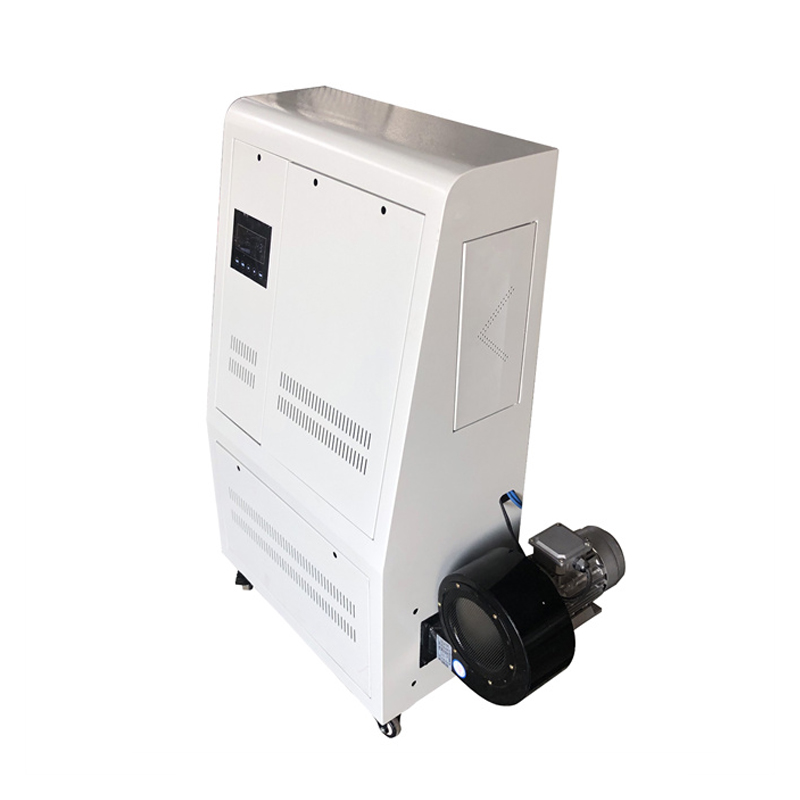
Buyers must prioritize smart diagnostics during the purchasing phase. Seek an Induction Hot Air Generator equipped with advanced fault-logging. Predictive maintenance alerts provide massive operational advantages. These features shift the burden from manual discovery to automated notification. Intelligent systems tell operators exactly what needs attention. This eliminates hours of frustrating diagnostic guesswork.
Assess how easily your maintenance teams can access core components. Complex, cramped internal layouts inflate repair costs. Systems featuring quick-disconnect electrical fittings streamline the replacement process. Slide-out inverter modules reduce physical repair times by up to 60%. Modularity allows you to swap parts quickly and resume production. Easy access directly translates to higher overall equipment availability.
Ensure the equipment supports rigorous lock-out/tag-out (LOTO) procedures. Maintenance designs must align perfectly with OSHA and ISO standards. Working around high-voltage and high-temperature equipment carries inherent risks. Clear physical isolation points protect your technicians. Documentation should clearly map every electrical breaker and coolant valve. Safety compliance is non-negotiable for industrial heating procurement.
Request detailed maintenance Service Level Agreements (SLAs) from vendors. Scrutinize their spare parts availability and delivery networks. Review their documented mean-time-to-repair (MTTR) statistics. These metrics expose the true operational reality of the equipment. A cheap initial purchase often hides expensive proprietary replacement parts. Ask vendors to prove their long-term technical support capabilities.
The reliability of an induction heating system is directly proportional to your maintenance discipline. We have seen how reactive approaches destroy valuable equipment components. Implementing a tiered schedule stabilizes operations and protects critical infrastructure. You hold the power to eliminate unplanned downtime.
Establish Baselines: Implement daily visual and environmental checklists immediately.
Protect Core Assets: Prioritize cooling flow and water quality above all else.
Schedule Downtime: Plan multi-year component replacements before they fail.
Finalize Smartly: Buyers should finalize their shortlist by comparing vendor support structures.
Review Warranties: Check warranty conditions regarding mandatory preventive maintenance intervals.
Start executing the routine checks outlined above today. Your equipment will reward you with years of continuous, stable operation.
A: Depending on the operating environment and thermal cycling intensity, coils can last anywhere from 1 to 5+ years. Routine cleaning heavily influences this timeline. Maintaining optimal cooling flow strictly dictates this lifespan. Ignoring scale buildup forces premature coil failures rapidly.
A: Cooling system failures are the primary culprits. Specifically, scale buildup in internal water lines restricts essential flow. Clogged air intake filters also cause severe issues. These cooling restrictions trigger automated thermal safety shutdowns to protect the sensitive inverter components.
A: General plant operators easily handle daily and weekly checks. However, quarterly and annual electrical audits require certified electrical technicians. Tasks like capacitor testing and insulation resistance checks demand specialized safety knowledge. Technicians must be familiar with high-frequency power supplies.
A: Yes. Loose electrical connections generate resistance. Scaled cooling lines reduce thermal transfer capabilities. Both issues force the power supply to draw more current to achieve the same target temperature. This inflates energy consumption over time. Routine maintenance prevents this wasteful power draw.


