
Please Choose Your Language
Views: 0 Author: Site Editor Publish Time: 2026-08-12 Origin: Site


Commercial greenhouse operators and serious hobbyists face rising energy costs today. This reality makes efficient heating critical to both operational profitability and optimal plant health. Maintaining a stable climate during harsh winter months challenges every grower. Propane and natural gas systems bring exhaust risks, while standard electric coils frequently burn out under high humidity. Agricultural heating demands robust reliability.
Growers are now shifting away from traditional gas furnaces and resistive electric heating. Instead, they are exploring the benefits of advanced magnetic induction technology. We evaluate whether an induction system provides the necessary heat without compromising your internal ecosystem.
The purpose of this article is evaluating whether an induction hot air generator is a viable, cost-effective, and scalable solution for agricultural heating environments based on thermodynamic realities and operational costs. By reviewing the thermodynamic realities, setup costs, and daily operating expenses, we will help you decide if this technology fits your specific growing operation.
Efficiency vs. Cost: Induction hot air generators offer near 98% energy-to-heat conversion with zero thermal lag, but carry a higher initial capital expenditure (CapEx) than traditional electric heaters.
Safety & Longevity: The absence of exposed heating elements reduces fire risks in dust- or pollen-heavy greenhouses and significantly extends equipment lifespan.
Infrastructure Requirements: Suitability depends heavily on local electricity rates, panel capacity, and potential integration with off-grid solar or wind setups.
Ideal Use Case: Best suited for well-insulated greenhouses, operations looking to eliminate fossil fuels, or those with excess renewable energy generation.
Understanding how a Induction Hot Air Generator works is essential before upgrading your facility. Most electric heaters rely on Joule heating. They push current through a high-resistance wire, which glows red-hot and warms the air. Induction technology operates differently. It uses an alternating magnetic field to heat a conductive metal core directly. When current flows through an induction coil, it creates a rapidly changing magnetic field. This field penetrates the metal core, inducing eddy currents inside it. The core generates intense heat instantly. A high-velocity fan then blows ambient greenhouse air across this hot core, delivering warm air to your plants.
This magnetic process changes the thermal dynamics of your heating system. Traditional resistance coils suffer from thermal lag. They take time to heat up and time to cool down. Furthermore, resistance wires oxidize over time. Their efficiency drops as the metal degrades in damp environments. Induction heating eliminates this degradation entirely. The heat transfers directly from the solid core into the air. You get continuous, stable output year after year. Heat-up times are nearly instantaneous. You achieve precise climate control without the slow response times typical of legacy electric systems.
A closed greenhouse relies on a delicate atmospheric balance. Plants need carbon dioxide to thrive during daylight hours. Propane and natural gas heaters consume oxygen. Unless properly vented, they also produce harmful exhaust gases like carbon monoxide and ethylene. Ethylene gas can cause premature flower drop and leaf curl. Induction heating is fully electric and combustion-free. It does not consume oxygen. It produces zero exhaust gases. You preserve optimal CO2 levels effortlessly. You also eliminate carbon monoxide risks for both your plants and your workers, ensuring a pristine growing environment.
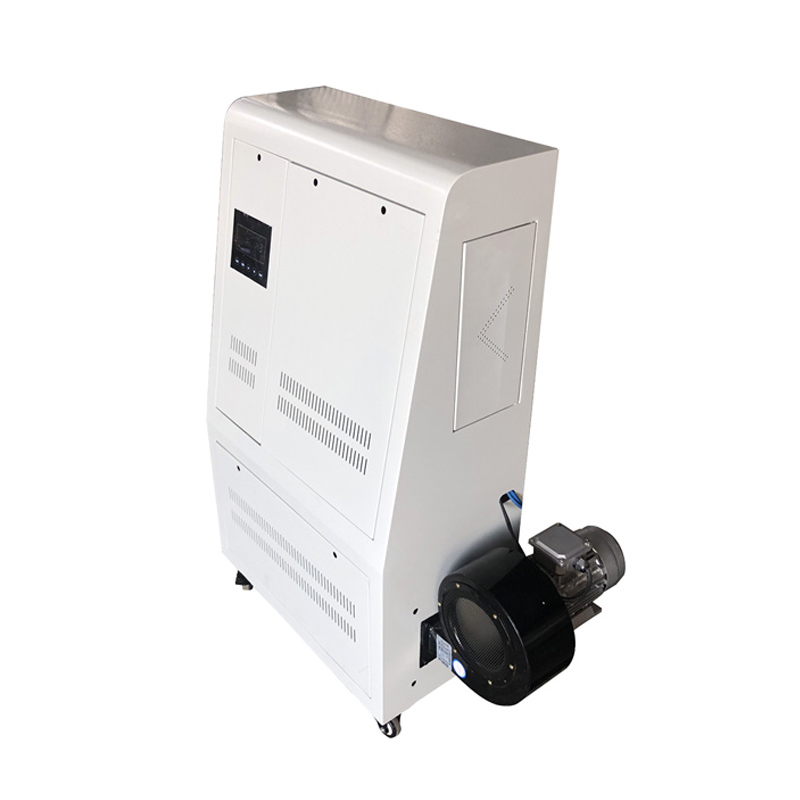
Initial capital expenditure (CapEx) represents the largest hurdle for growers considering this upgrade. You must frame the initial investment against standard HVAC systems. Gas furnaces are generally cheap to purchase. Resistive electric blowers cost even less upfront. Induction hot air systems require precision electronics, pure copper coils, and heavy-duty magnetic cores. Consequently, their purchase price runs higher. However, you are buying industrial-grade durability. You avoid the recurring costs of replacing burnt-out heating coils or cracked gas heat exchangers.
To calculate operating expenses, you must look at your electrical consumption. Induction systems boast up to 98% energy-to-heat conversion. They convert nearly every watt of electricity into usable heat. However, overall OpEx depends strictly on your local cost per kilowatt-hour (kWh). If your local electricity rates are low, induction becomes highly profitable. If you pay premium rates for electricity, natural gas might still look cheaper on paper. You calculate daily running costs by multiplying the unit's kilowatt rating by your running hours, then multiplying by your kWh rate. Accurate OpEx tracking ensures you maintain healthy profit margins.
Equipment failures in mid-winter can devastate your crop yield. Induction systems excel at minimizing downtime. They eliminate routine maintenance headaches. Consider the common maintenance tasks you completely avoid:
Cleaning dirty gas burners and clogged pilot lights.
Replacing brittle, oxidized electric resistance wires.
Checking flue pipes for dangerous exhaust leaks.
Refueling propane tanks during freezing weather.
The only moving part is the blower fan. The magnetic core never touches the induction coil. This frictionless, wear-free design translates to dramatically lower seasonal maintenance costs. You spend more time growing and less time repairing.
Warm air holds more moisture than cold air. Managing this humidity is crucial to preventing mold and mildew. Induction hot air systems integrate seamlessly with existing greenhouse ventilation. You can hook them directly into perforated poly-tubes suspended above your canopy. The powerful blower fan pushes the dry, heated air evenly down the entire length of the tube. This creates uniform temperature zones. You eliminate cold spots. By avoiding localized condensation on plant leaves, you actively reduce the risk of Botrytis and powdery mildew outbreaks.
Fossil fuels have dominated agricultural heating for decades. They offer cheap fuel costs in many regions. However, gas systems require complex infrastructure. You need gas lines, exhaust flues, and fresh air intakes. Venting a gas heater inherently wastes energy, as you blow heated exhaust outside. A Induction Heater operates entirely clean. It requires zero ventilation for exhaust. 100% of the heat stays inside your greenhouse. Gas combustion also produces water vapor, which drives up interior humidity. Induction heating produces no additional moisture, giving you tighter control over your vapor pressure deficit (VPD).
Both induction and resistive systems use electricity. Both technically achieve near 100% efficiency inside a closed room. However, you must differentiate their lifespan and safety profiles. A resistive wire heater reaches dangerous surface temperatures. If dust, pollen, or dry plant matter touches the coil, it can ignite. Induction cores operate efficiently without exposing red-hot wires to the air. Furthermore, we must address the myth of "over-unity" efficiency. Induction does not create more energy than it consumes. Instead, it minimizes heat transfer loss. It eliminates the element degradation that slowly robs traditional electric heaters of their output over time.
Many eco-conscious growers turn to biomass boilers to escape fossil fuels. Wood pellets and agricultural waste burn cheaply. Yet, biomass systems demand intense labor. You must load fuel, clean ash, and perform weekly maintenance. An induction system offers true "plug-and-play" automation. You connect it to a digital thermostat, and it runs autonomously. You never handle fuel. You never shovel ash. You gain back hundreds of labor hours each season.
Heating Technology | Energy Source | Emissions Inside Greenhouse | Maintenance Intensity | Expected Core Lifespan |
|---|---|---|---|---|
Magnetic Induction | Electricity | None | Very Low | 10+ Years |
Resistive Electric | Electricity | None | Medium | 1-3 Years |
Propane / Natural Gas | Fossil Fuel | Water Vapor, CO2 (Potential CO) | High | 5-8 Years |
Biomass Boiler | Wood/Pellets | Requires strict venting | Very High | 10+ Years |
Modern agriculture is rapidly adopting solar power. The growing trend of pairing electric heating with solar arrays makes perfect environmental sense. If you generate your own electricity, you insulate your business from volatile utility rates. An induction system is the ideal companion for a solar-powered greenhouse. Because it converts electricity to heat with profound efficiency, you maximize the value of every solar watt you generate. It represents the ultimate step toward a zero-carbon, sustainable growing operation.
Despite the hype, you need a skeptical, realistic look at the sizing requirements. Running an industrial heater off-grid is challenging. Heating air requires massive amounts of power. You must account for surge wattage. When an induction system powers on, it can pull a significant electrical spike. Your off-grid inverter must handle this surge without tripping. Furthermore, the continuous power draw will drain standard battery banks quickly. You cannot run a 10kW heater all night on a small residential battery. Proper engineering is mandatory. You will need a heavy-duty inverter and a substantial lithium iron phosphate (LiFePO4) battery bank.
To overcome battery limitations, smart growers use thermal banking. Instead of storing electricity in expensive batteries, you store heat in cheap thermal mass. You suggest operational strategies like this: Run your induction generator heavily during peak solar production hours (10 AM to 3 PM). Use it to heat up the air and surrounding thermal mass inside the greenhouse. You can place large water barrels painted black, or install heavy stone floors. These materials absorb the heat during the day. When the sun sets, you turn the heater off. The water barrels slowly radiate their stored heat into the greenhouse all night, keeping your plants safe without draining a battery bank.
Before purchasing new equipment, you must assess your greenhouse structure. Electric heating is only economically viable if your facility retains heat well. You must define your baseline insulation. Single-pane glass or thin plastic film bleeds heat rapidly. Trying to heat an uninsulated high tunnel with electricity will result in catastrophic bills. Conversely, twin-wall or triple-wall polycarbonate panels provide excellent R-values. They trap the heat inside. A well-insulated structure requires a much smaller heater, lowering both your CapEx and OpEx.
You cannot plug an industrial heater into a standard wall outlet. You need robust electrical infrastructure. Follow this checklist to evaluate your current setup:
Verify your main breaker panel's total amperage capacity.
Determine if you have single-phase 220V or commercial 3-phase 380V power available.
Ensure you have space for dedicated high-amperage breakers.
Check the distance from your power panel to the greenhouse to calculate wire gauge needs.
Upgrading a commercial electrical panel can add thousands of dollars to your project. You must factor this into your budget early.
To justify the investment, guide your financial planning by modeling your payback period. Look beyond the purchase price. Calculate your projected fuel savings if transitioning from expensive delivered propane. Factor in the reduced maintenance labor. You also save money by avoiding frequent replacement of resistive heating elements. Additionally, research local agricultural energy rebates. Many governments offer massive financial incentives for farmers who replace fossil fuel equipment with high-efficiency electric alternatives. These rebates can shorten your payback period by years.
Do not guess your heating requirements. Guessing leads to undersized units that freeze plants or oversized units that waste capital. We advise consulting with an HVAC engineer before purchasing anything. Ask them to run a precise BTU/kW heat loss calculation for your specific greenhouse dimensions, insulation type, and local winter temperatures. Once you know exactly how many kilowatts you need to maintain your target temperature, you can confidently select the right model.
The agricultural industry must adapt to changing energy markets and stricter environmental regulations. An induction hot air generator is highly suitable for specific greenhouse scenarios. It excels in eco-conscious operations, setups with abundant renewable energy, or regions burdened with high gas costs and strict safety requirements. It offers unmatched longevity, superior safety, and precise climate control without the toxic exhaust of fossil fuels.
We encourage you to review your current energy bills today. Assess your greenhouse's heat loss, identify your true maintenance costs, and explore the benefits of magnetic heating. Contact a specialized manufacturer to request a technical spec sheet or a professional consultation for proper sizing. Upgrading your heating infrastructure is an investment in your crop's future stability.
A: No. Induction heaters require an appropriately sized inverter and battery bank to handle the alternating current (AC) power draw. Direct direct-current (DC) to induction operation is generally not standard for off-the-shelf units. You must ensure your inverter can handle the heavy continuous wattage and initial startup surges.
A: Like any hot air system, raising the air temperature inherently lowers the relative humidity inside the room. It does not actively extract or remove moisture from the environment. However, you still need proper irrigation practices and dedicated humidity monitoring to maintain optimal plant transpiration rates.
A: Magnetic induction cores offer exceptional durability, often lasting 10 or more years without degrading. In contrast, standard resistive heating elements suffer from oxidation and typically require a frequent replacement cycle every 1 to 3 years, especially in high-humidity agricultural environments.


