
Please Choose Your Language
Views: 0 Author: Site Editor Publish Time: 2026-08-12 Origin: Site


Commercial food processing demands exceptional efficiency to maintain profitability. Achieving rapid, consistent moisture removal is a critical daily operational goal. However, doing this without compromising nutritional integrity, flavor, or safety compliance remains a constant challenge for facility managers. Historically, operators relied heavily on volatile fossil-fuel burners and slow-response resistive heaters to dry products. These older systems frequently introduce contamination risks, create high energy waste, and suffer from frustrating temperature lags. The industry urgently needs a shift toward cleaner, more responsive electromagnetic induction technologies.
This article explores how a modern heating system fits into industrial food drying applications. We will objectively compare efficiency, facility implementation requirements, and overall financial return against legacy systems. You will learn exactly how to upgrade your processing lines for safer, faster, and more reliable production runs.
Precision Temperature Control: Induction enables near-instantaneous thermal response, reducing thermal lag and preventing localized food burning or over-drying.
Strict Food Safety Compliance: Operates as a purely indirect heating system, eliminating combustion byproducts and minimizing contamination risks.
Energy Efficiency Realities: While initial CapEx is higher than standard resistive heaters, the >95% electro-thermal conversion rate significantly lowers long-term OpEx.
Versatile Integration: Can be retrofitted into existing fluidized beds, tray dryers, or rotary drying systems.
Traditional drying systems create significant operational bottlenecks on the modern plant floor. Direct-fired gas heaters pose inherent risks of volatile organic compound (VOC) emissions. They demand strict, expensive venting requirements to meet local environmental regulations. Traditional electric ovens present their own set of costly problems. They suffer from high energy waste and painfully slow heat-up cycles. Cool-down cycles also delay necessary cleaning shifts. These outdated methods limit your daily production capacity.
Facility managers must define clear success criteria for any equipment upgrade. Upgrading your heating infrastructure requires a strategic approach. We recommend focusing on three core pillars:
Quality Output: The system must maintain product color, texture, and active ingredients. This is especially crucial for high-value items like herbs, spices, or nutraceuticals.
Operational Economics: A successful upgrade reduces the kilowatt-hours consumed per kilogram of moisture removed. Energy efficiency directly impacts your bottom line.
Compliance: The process air must meet strict FDA, USDA, or CE food hygiene standards. Clean air prevents product recalls and protects your brand reputation.
Evaluating these criteria helps you justify the initial capital expenditure. It shifts the focus from simply buying machinery to investing in long-term operational resilience. You need a system delivering predictable results every single shift.
Understanding the underlying physics clarifies why this technology outperforms older heating methods. High-frequency alternating current flows through specialized copper coils. This current generates a powerful, rapidly oscillating magnetic field. A highly conductive internal matrix sits inside this magnetic field. We call this the heat exchanger. The magnetic field induces eddy currents within this solid metal matrix. The metal heats up almost instantaneously due to electrical resistance. It heats itself, rather than trying to heat the air directly through an exposed element.
Heat transfer to the process air happens seamlessly. Industrial blowers force ambient or filtered air over this induction-heated matrix. The air instantly absorbs clean thermal energy. It reaches the exact target temperature before entering the drying chamber. The thermal response time is incredibly short. This eliminates the lengthy warm-up periods associated with conventional industrial ovens.
Food processing lines often require different types of thermal energy. You must choose the right equipment for specific production stages. For dehydration, roasting, and baking, dry heat is mandatory. In these scenarios, integrating an Induction Hot Air Generator provides the necessary rapid moisture evaporation. Other production phases require moisture-rich heat. Blanching, sterilization, and pasteurization often occur prior to the final drying phase. For these wet applications, an Induction Steam Generator delivers the necessary sanitary steam quickly and efficiently.
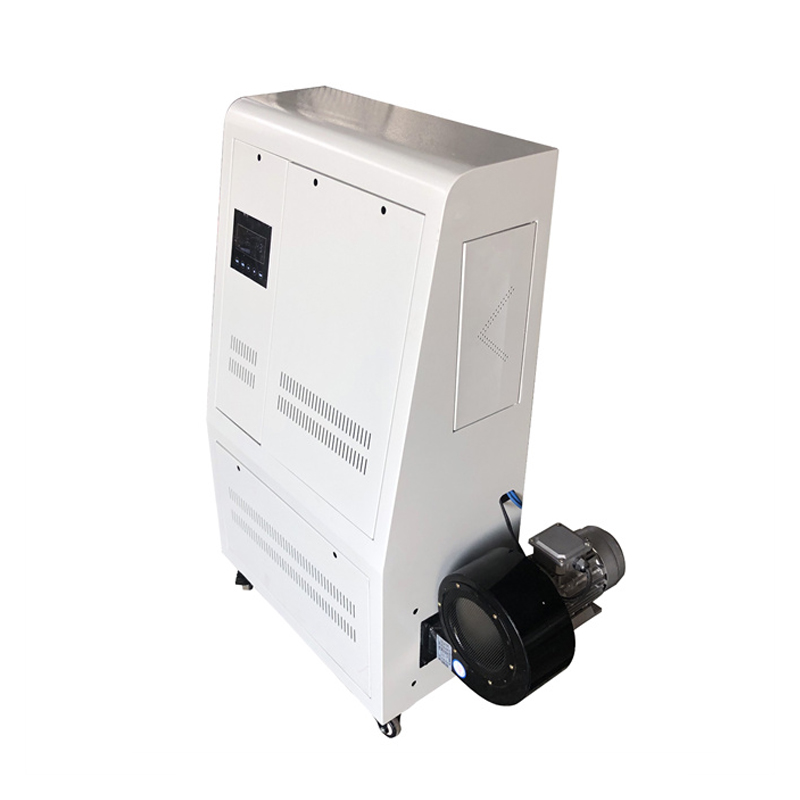
Food safety regulations continually grow more stringent. Induction technology offers an inherent indirect heating advantage. It produces zero combustion byproducts. The heat source never relies on burning fossil fuels. Therefore, you completely eliminate carbon dioxide and sulfur dioxide from the process airstream. Unburned hydrocarbons never contact your delicate food products. This clean thermal generation helps facilities easily pass strict hygiene audits.
Sanitary air quality remains a top priority for quality assurance teams. You can seamlessly integrate HEPA filtration systems into an induction setup. The internal heat exchanger matrix does not degrade or flake over time. Resistive heating coils often shed metal particles as they age. Gas burners inevitably produce micro-particulates and soot. Induction matrices remain structurally sound, ensuring no particulate matter enters your drying chamber.
Risk mitigation extends beyond food safety. It protects your physical facility and personnel. Removing open flames drastically reduces the risk of factory fires. You no longer need combustible fuel lines running through your processing areas. Many operators report securing lower insurance premiums after upgrading to flame-free induction systems. It offers a much safer working environment for your plant operators.
Best Practices for Air Compliance: Always install secondary air filtration immediately after the blower fan. This ensures the air entering the induction matrix is already free of ambient factory dust. It prolongs the life of the internal components and guarantees maximum food safety.
Deciding between different modern drying technologies requires understanding their specific optimal use cases. Heat pump dryers and induction generators both offer excellent efficiency. However, they serve entirely different thermodynamic needs on the processing floor.
Heat pumps excel at low-temperature, slow drying processes. If you process delicate fruits or sensitive proteins, a heat pump preserves cellular structures beautifully. However, heat pumps struggle to reach high temperatures quickly. Induction technology proves vastly superior for high-temperature, high-speed drying applications. When you need rapid moisture evaporation for grains, extruded snacks, or sterilization drying, induction delivers immediate, intense thermal energy.
When comparing induction to standard resistive heaters, efficiency and longevity tell the real story. Induction transfers heat directly to the internal metal medium. Minimal ambient heat escapes into the surrounding room. Resistive heater bands constantly lose radiant heat to the factory environment. This forces your HVAC system to work harder, compounding your energy waste. Furthermore, induction systems feature no exposed heating elements to burn out. They do not degrade from oxidation over time. This design leads to significantly lower maintenance downtime.
Drying Technology Comparison Matrix
Technology Type | Optimal Application | Heat-Up Speed | Energy Efficiency Rating |
|---|---|---|---|
Induction Hot Air | High-speed drying, roasting, sterilization | Near-Instantaneous | > 95% |
Heat Pump | Low-temp dehydration, delicate fruits | Slow to Moderate | High (at low temps) |
Direct Gas Burner | High-temp bulk processing (low hygiene) | Fast | Moderate (high exhaust loss) |
Resistive Electric | Small batch baking, basic curing | Slow | Low to Moderate (radiant loss) |
Transitioning to electromagnetic heating requires careful facility planning. It is not a simple plug-and-play operation. You must prepare your infrastructure and your maintenance teams for the shift.
Electrical Infrastructure Requirements: Switching from gas-fired units to induction demands substantial electrical power. You must comprehensively evaluate your facility’s current electrical capacity. Many older plants require upgraded transformers and thicker cabling to handle the necessary amperage safely. Do not skip this critical engineering assessment.
Retrofitting Existing Lines: Induction generators function beautifully as modular heat sources. You do not always need to buy entirely new drying chambers. Engineers can retrofit these units onto continuous belt dryers or spray dryers. They frequently replace old burner boxes on existing hot air circulation ovens. This modularity reduces your overall capital expenditure.
Maintenance and Scalability Shifts: The maintenance routine changes drastically.
Pros: You say goodbye to cleaning dirty burner nozzles. Routine fuel line inspections become obsolete. There are no carbon deposits to scrub away during weekend shutdowns.
Cons: Your current mechanical boiler technicians might struggle at first. The new system requires staff trained in variable frequency drives (VFDs) and electrical induction boards. You will need to invest in targeted electrical training for your maintenance crew.
Common Mistake: Failing to verify the exact airflow requirements of the existing dryer before installing the induction unit. If the existing blower fan lacks the pressure to push air through the dense induction matrix, drying efficiency will plummet. Always match blower specifications to the new heat exchanger's resistance.
Procuring new capital equipment requires a data-driven justification. Begin by calculating your baseline operational metrics. Facility managers must audit the current energy cost per batch carefully. You also need to track the average downtime caused by temperature inconsistencies. Knowing your exact current losses makes it easier to calculate the return on investment for an induction upgrade.
Next, strictly define your temperature parameters. Ensure the required drying temperature matches the optimal output range of the proposed unit. Induction technology operates highly efficiently up to 300°C (572°F). If your process requires temperatures slightly above this, discuss custom matrix configurations with the manufacturer. If you need low temperatures around 40°C, a heat pump might actually serve you better.
Finally, always request vendor proof before signing purchase orders. Demand pilot-scale testing data. Manufacturers should run tests on your specific food product. This verifies the actual moisture loss rates and validates energy consumption claims. Never commit full-scale CapEx based solely on theoretical brochures. Real-world testing guarantees the equipment performs exactly as promised on your production floor.
Upgrading your facility thermal systems is a strategic necessity in modern food processing. An electromagnetic hot air system represents a high-performance, compliant solution. It helps processors dramatically optimize energy use while entirely eliminating combustion hazards. The technology delivers unparalleled precision, ensuring your food products maintain maximum quality and safety.
While upgrading requires careful evaluation of your electrical infrastructure, the benefits heavily outweigh the initial hurdles. Take the following action-oriented next steps to begin your modernization journey:
Audit your current electrical panel capacity and note any required transformer upgrades.
Calculate your exact daily energy waste and product loss due to traditional heating lags.
Identify specific production lines where modular retrofits would yield the fastest return on investment.
Contact trusted manufacturers to schedule pilot-scale drying tests using your own product samples.
A: These units typically last 10+ years in continuous environments. The technology utilizes no mechanical friction or exposed heating elements to burn out. This significantly extends operational life. However, components like cooling fans and electrical control boards do require standard periodic maintenance to ensure longevity.
A: Yes. Induction technology can easily and safely generate process air temperatures exceeding 250°C (482°F) very rapidly. This rapid, high-intensity heat makes it highly suitable for commercial roasting applications involving nuts, coffee beans, and various seeds.
A: This depends heavily on your local utility rates. While gas may cost less per BTU in certain regions, induction offers an impressive 95%+ electro-thermal efficiency. It suffers no exhaust heat loss. This extreme efficiency usually results in much lower overall operational expenses over a 5-year period.
A: No. The intense magnetic field remains entirely contained within the generator's insulated housing to heat the internal exchanger matrix. The electromagnetic waves never exit the unit. Only clean, electromagnetically neutral hot air travels out of the generator and interacts with your food product.


