
Please Choose Your Language
Views: 0 Author: Site Editor Publish Time: 2026-08-12 Origin: Site


Engineering, facility, and high-end residential buyers face a critical choice. They need absolute certainty about temperature precision, safety, and compliance. Variable inlet temperatures and fluctuating flow rates make stable water heating a complex thermodynamic challenge. Systems must respond instantly to changing demands without compromising output.
Unlike traditional resistance models suffering from thermal lag, a modern Induction Water Heater solves this issue. It maintains stability through direct electromagnetic energy transfer and high-frequency real-time modulation. You will discover exactly how these physical mechanics and digital controls work together.
Zero Thermal Lag: Electromagnetic induction heats the vessel directly, eliminating the delay between power application and heat transfer common in traditional resistance elements.
Precision Modulation: The system relies on continuous power scaling—not binary on/off switching—to maintain exact temperatures.
The Brain of the System: The Heater Control Board is the critical differentiator, utilizing PID (Proportional-Integral-Derivative) logic and dual sensors to adjust magnetic field intensity instantly.
ROI Justification: While initial CAPEX is higher, the precise temperature control justifies the cost in scale-sensitive, high-compliance, or continuous-demand applications.
Water exists in constant motion during the heating process. We call this the "Delta-T" challenge. Delta-T represents the required temperature rise from the cold inlet to the hot outlet. The system must account for this moving mass instantly. Sudden drops in inlet temperature shock the system. Spikes in flow rate across gallons or liters per minute demand immediate energy adjustments.
Temperature fluctuations introduce severe operational risks across multiple environments. You cannot afford unstable water heating in professional settings.
Safety and Scalding Risks: High-end residential and healthcare facilities require strict maximum temperatures. Spikes cause severe burns in seconds.
Compliance Failures: Industrial and commercial processes rely on exact thermal parameters. A drop in temperature ruins chemical mixes or fails sanitation codes.
Energy Waste: Systems overcompensating for temperature drops burn excess electricity. This constant over-correction wastes massive amounts of power.
Traditional tank-based and instant electric resistance heaters struggle here. They rely on heating a physical element first. The element then heats the water. This creates inherent "overshoot" and "undershoot" cycles. The thermal mass of the heating element retains heat too long. It also takes too long to warm up. This delay guarantees an unstable outlet temperature during flow changes.
Common Mistake: Facility managers often oversize traditional resistance heaters to compensate for undershoot. This practice only worsens the overshoot cycle and wastes more electricity.
Understanding electromagnetic induction requires looking at how we generate heat. High-frequency alternating current passes through a copper coil. This creates a rapidly fluctuating magnetic field inside the unit. The magnetic field passes harmlessly through non-conductive barriers.
The conductive pipe or inner vessel itself becomes the heat source. The magnetic field induces eddy currents within the metal walls. These microscopic currents generate intense, immediate heat directly inside the metal. There is no separate heating element to warm up first. We essentially use the pipe as the element.
This structural difference eliminates thermal inertia. Thermal inertia is the enemy of temperature stability. Because we have no traditional element, energy transfer stops instantaneously when power cuts. It also starts instantaneously when power applies. You gain perfect control over the heat transfer process.
Best Practice: Always evaluate the internal vessel material when specifying induction units. Ferromagnetic materials like specific stainless steel grades maximize eddy current generation.
Heating Technology | Heat Generation Source | Thermal Lag | Temperature Stability |
|---|---|---|---|
Electric Resistance | Internal metallic element | High (Slow heat up/cool down) | Poor during flow changes |
Tankless Gas | Combustion burner | Medium (Purge and ignite delay) | Moderate (Prone to cold water sandwiches) |
Electromagnetic Induction | The vessel walls (Eddy currents) | Zero (Instant energy transfer) | Excellent (Precise control) |
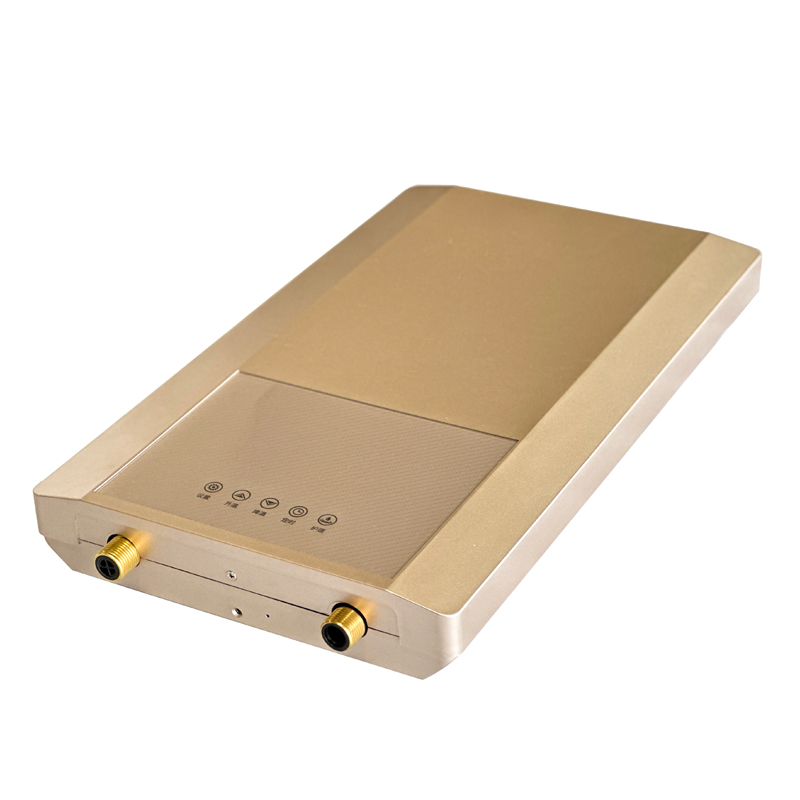
Hardware alone cannot guarantee perfect temperature stability. We need intelligent software to manage the magnetic field. This requires a sophisticated sensor architecture. High-polling-rate thermistors sit at both the inlet and the outlet. They provide continuous, real-time data feeds. They monitor exact conditions dozens of times per second.
The Heater Control Board processes this incoming data. It uses Proportional-Integral-Derivative (PID) control logic. PID algorithms anticipate temperature changes rather than just reacting to them. Proportional logic handles immediate errors. Integral logic corrects historical drift. Derivative logic predicts future trends based on the rate of change.
This board actively commands the power delivery system. It manages the Insulated-Gate Bipolar Transistors (IGBTs). The system does not just turn the heater "on" or "off." Binary switching creates temperature spikes.
Instead, the board actively modulates the frequency and power output of the IGBTs. It matches the exact energy load required by the current flow rate. If a user opens a second faucet, the flow rate increases. The inlet sensor detects the volume change. The control board instantly ramps up IGBT frequency. The magnetic field intensifies. The vessel generates more heat. The outlet temperature never dips.
You must understand the physical and electrical limits of this technology. True continuous, stable output at high flow rates requires substantial power. You need high-amperage electrical service. An induction unit is not a plug-and-play retrofit for low-voltage setups. Upgrading commercial electrical panels often becomes mandatory.
Physics dictates strict flow rate thresholds. Every heater has a maximum kW capacity. This capacity defines the absolute limit of the magnetic field. If the water flow rate exceeds this thermal capacity, outlet temperature stability will fail. Sizing the unit correctly is non-negotiable.
Calculate peak gallons per minute (GPM) or liters per minute (LPM).
Determine the lowest possible winter inlet temperature.
Establish the strict target outlet temperature.
Select a kW rating exceeding this maximum Delta-T calculation.
Water quality also impacts long-term efficiency. Many assume induction ignores hard water entirely. The lack of a traditional heating element does reduce localized boiling. This means less immediate scale buildup compared to resistance coils. However, severe hard water still impacts the internal vessel over time. Scale coats the vessel walls and acts as an insulator. You still need proper water filtration to maintain optimal energy transfer.
Decision-makers must balance upfront costs against long-term operational advantages. The initial CAPEX of induction units sits higher than traditional models. Copper coils, IGBT inverters, and advanced control boards cost more to manufacture. However, the OPEX tells a different story. You gain long-term energy savings through precise power modulation. You also face reduced maintenance because there are no burnt-out elements to replace.
We provide a clear framework to help buyers evaluate their needs.
Evaluation Category | Traditional Resistance | Electromagnetic Induction | Shortlist Recommendation |
|---|---|---|---|
Temperature Precision | Fluctuates under variable flow | Maintained strictly via PID logic | Choose induction for compliance and safety. |
Space Constraints | Often requires large tanks | Compact, high-density output | Choose induction for tight commercial footprints. |
Maintenance Frequency | High (Scale ruins elements) | Low (No internal elements) | Choose induction to avoid costly downtime. |
You should shortlist induction for specific scenarios. Recommend it for applications requiring strict temperature compliance. It excels in high-volume environments constrained by space. It also provides peace of mind where traditional element failure causes unacceptable operational downtime.
Before requesting a vendor quote, take clear next steps. Audit your current electrical capacity first. Ensure your facility handles high-amperage, continuous loads. Next, physically measure peak flow demands during your busiest operational hour. Accurate data prevents undersizing and guarantees temperature stability.
Outlet temperature stability in an induction water heater is not magic. It results from a distinct mechanical advantage governed by advanced software. Zero thermal lag ensures energy transfers instantly. The intelligent heater control board modulates this energy flawlessly.
This technology is not suitable for every budget or every building. It requires robust electrical infrastructure and a higher initial investment. However, it represents the gold standard for electric instantaneous water heating precision. If your facility demands absolute safety, strict compliance, and continuous performance, begin your electrical audit today. Accurate sizing and installation will deliver unparalleled thermal stability for years to come.
A: Cost and complexity restrict widespread use. The required components—copper coils, inverters, and an advanced Heater Control Board—make them significantly more expensive to manufacture than simple resistive wire elements. Budget-conscious consumers usually opt for cheaper, traditional alternatives despite their performance flaws.
A: High-quality control boards feature voltage regulation components. They compensate for minor electrical dips to maintain consistent magnetic field strength. This keeps the outlet temperature stable during small fluctuations. However, severe brownouts will trigger internal safety shutdowns to protect the sensitive inverter components.
A: No. It uses solid-state thermistors communicating directly with the main control board. This modern digital architecture replaces traditional mechanical bimetallic thermostats entirely, allowing for real-time PID modulation instead of clunky on/off switching.


