
Please Choose Your Language
Views: 0 Author: Site Editor Publish Time: 2025-07-16 Origin: Site


Induction water heaters are revolutionizing the way we think about heating water for domestic and industrial use. Unlike traditional water heaters that rely on burning fuel or electric resistance, induction water heaters utilize electromagnetic fields to heat water efficiently and rapidly. This innovative approach not only saves energy but also reduces environmental impact. In this article, we will delve deep into the working principles of induction water heaters, exploring their advantages, applications, and the technology behind them.
Understanding the functionality of an induction water heater is essential for anyone looking to upgrade their water heating systems or for those interested in energy-efficient technologies.
At the core of induction heating is the principle of electromagnetic induction, first discovered by Michael Faraday in 1831. This principle states that a changing magnetic field within a coil of wire induces an electromotive force (EMF) in nearby conductors. In induction water heaters, an alternating current passes through a coil, creating a rapidly changing magnetic field. This magnetic field induces eddy currents in a ferromagnetic material, commonly referred to as the heating element or the induction coil.
These eddy currents generate heat due to the resistance of the material. The heat is then transferred to the water flowing around or over the heating element. The process is highly efficient because the heat is produced directly within the heating element without intermediary steps, minimizing energy losses.
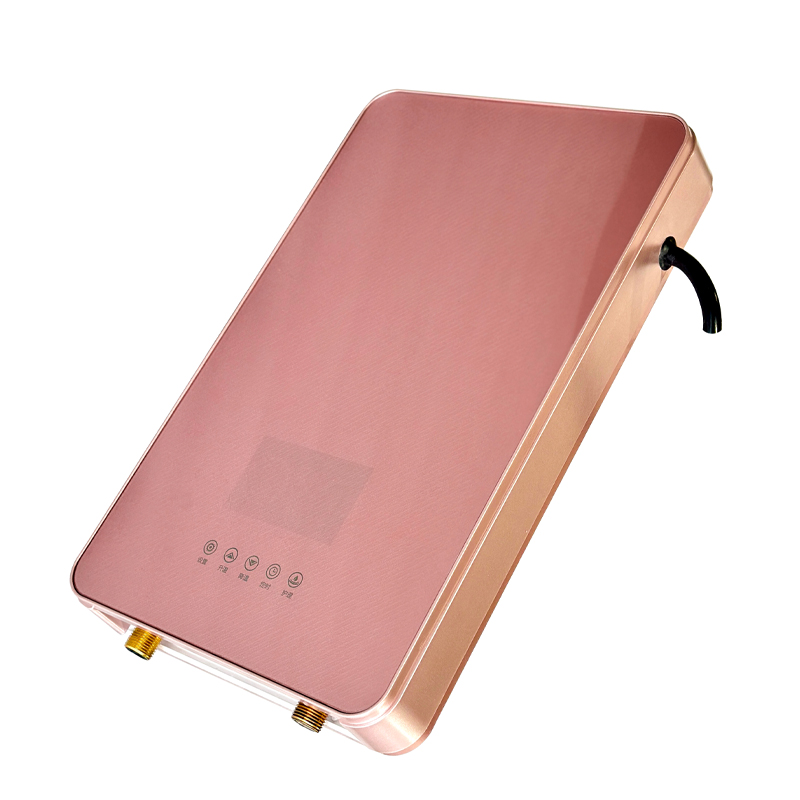 An induction water heater comprises several critical components that work in harmony to heat water efficiently:
The induction coil is a coil of conductive material, typically copper, through which an alternating current flows. This coil generates the alternating magnetic field necessary for inducing eddy currents in the heating element. The design and quality of the coil significantly impact the efficiency and performance of the heater.
The heating element is usually made of a ferromagnetic material like iron or steel. When placed within the magnetic field generated by the induction coil, it heats up due to induced eddy currents. The choice of material and its properties, such as resistivity and magnetic permeability, affect the heating efficiency.
The controller unit regulates the power supply to the induction coil and monitors the system's overall operation. It includes safety features like overheat protection, dry-run protection, and temperature control. Advanced controllers may also offer features like programmable settings and remote monitoring.
The operation of an induction water heater involves several sequential steps:
When the heater is switched on, the controller unit supplies an alternating current to the induction coil. The frequency of this current is typically much higher than the standard power supply frequency to enhance heating efficiency.
The alternating current flowing through the induction coil generates a rapidly changing magnetic field. The characteristics of this field are determined by the current's frequency and amplitude, which are controlled by the controller unit.
The magnetic field induces eddy currents in the ferromagnetic heating element placed within or near the coil. Due to the material's resistance, these currents generate heat directly within the heating element. This process is highly efficient as it minimizes energy losses associated with heat transfer.
The heat generated in the heating element is transferred to the water through conduction and convection. The water flows over or around the heating element, absorbing the heat and increasing in temperature. The design of the water flow path is crucial for maximizing heat transfer efficiency.
Induction water heaters offer numerous benefits over traditional heating methods:
Due to direct heating of the element and minimal energy loss, induction water heaters can achieve efficiency levels of up to 98%. This efficiency translates into lower energy consumption and cost savings over time.
Induction heating allows for rapid temperature increases because the heating occurs directly within the element. This feature is particularly beneficial for applications requiring instant hot water.
With no open flames or high-temperature surfaces exposed, induction water heaters reduce the risk of burns and fires. Safety features in the controller unit further enhance operational safety.
Induction water heaters have fewer moving parts and do not suffer from issues like scale buildup on heating elements, which is common in resistance heaters. This leads to lower maintenance requirements and longer service life.
The versatility of induction water heaters makes them suitable for a wide range of applications:
In homes, induction water heaters provide efficient hot water for showers, sinks, and appliances. Their compact size and efficiency make them ideal for modern households looking to reduce energy consumption.
Industries utilize induction water heaters for processes that require precise temperature control and rapid heating. Applications include chemical processing, food and beverage production, and pharmaceuticals.
Hotels, restaurants, and hospitals benefit from the reliability and efficiency of induction water heaters to meet their high hot water demands without excessive energy costs.
With growing concerns about energy conservation and environmental sustainability, induction water heaters offer a viable solution. Their high efficiency reduces the amount of energy required to heat water, leading to lower greenhouse gas emissions when the energy source is considered. Moreover, the absence of fossil fuels in the heating process means no direct emissions from the heater itself.
According to a study by the U.S. Department of Energy, upgrading to high-efficiency water heaters can reduce water heating energy use by 10% to 50%. Induction water heaters, with their superior efficiency, are at the forefront of this energy-saving potential.
When comparing induction water heaters to traditional electric and gas heaters, several key differences emerge:
Although the initial cost of an induction water heater may be higher, the long-term operating costs are lower due to reduced energy consumption. Over the lifespan of the heater, users can realize significant savings.
Traditional heaters often require regular maintenance to address issues like scaling, corrosion, and component wear. Induction heaters, with fewer mechanical parts and no direct contact between the heating element and water, have lower maintenance needs.
Induction heaters offer consistent performance and can maintain precise temperature control, which is essential for processes that require specific heating parameters.
Despite the advantages, there are considerations to keep in mind when adopting induction water heaters:
The upfront cost of induction water heaters can be higher than traditional systems. However, this cost is often offset by the reduced energy bills over time.
Induction heaters may require specific electrical setups, including higher voltage supplies or dedicated circuits, which could necessitate electrical system upgrades in some buildings.
Real-world applications highlight the benefits of induction water heaters. For instance, a manufacturing plant that replaced its traditional boilers with induction water heaters reported a 30% reduction in energy costs and improved process control. Similarly, a hotel chain that installed induction water heaters across its properties saw a significant decrease in maintenance issues and energy consumption.
Advancements in materials science and electronics are paving the way for even more efficient induction water heaters. Innovations include the use of superconducting materials for coils, which could reduce energy losses, and smart controllers that integrate with building management systems for optimized performance.
Research is also being conducted on integrating induction heating with renewable energy sources, such as solar panels, to create entirely green heating solutions. This integration could further reduce environmental impact and operational costs.
Proper installation is crucial for the optimal performance of induction water heaters. It is recommended to have the system installed by certified professionals who understand the electrical requirements and safety protocols. Regular inspections, although less frequent than with traditional heaters, ensure that the system operates efficiently and safely.
Users should also be educated on the operation of the heater, including how to adjust settings and interpret system indicators. This knowledge enhances user experience and prolongs the system's lifespan.
Induction water heaters represent a significant advancement in heating technology, offering efficiency, safety, and reliability. Understanding how an induction water heater works provides valuable insights into its benefits and applications. As energy costs rise and environmental concerns grow, induction water heaters offer a practical solution for both residential and industrial heating needs. By investing in this technology, users can enjoy reduced energy bills, lower maintenance requirements, and contribute to a more sustainable future.
The continued development and adoption of induction heating technology hold the promise of even greater efficiencies and applications. As the technology matures, it is poised to become a standard in water heating solutions worldwide.


