
Please Choose Your Language
Views: 0 Author: 周武江 Publish Time: 2026-01-31 Origin: Site


In the food processing industry, steam penetrates the entire production process. The stability, security and cost of steam equipment have direct implications for food quality and corporate profitability, whether for steam cooking, sterilization, disinfection, disinfection or sterilization with cervical disinfectants, or central kitchen equipment.
In recent years, a growing number of food companies have begun to choose high-frequency induction steam generators as a gradual replacement for conventional gas boilers and electrically resistant steam equipment. So, what's good? Is it really more convenient for the food industry? Let us be clear at some point.
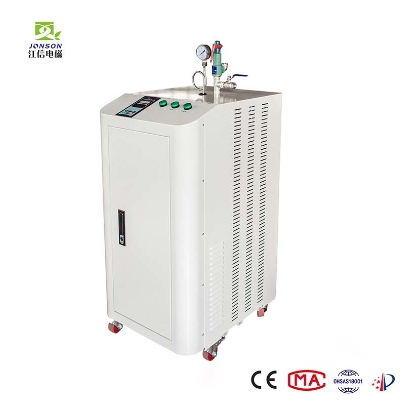
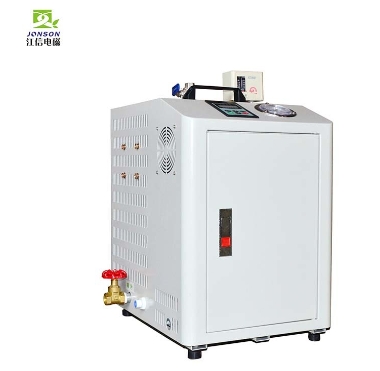
Unlike the normal industry, food production has three "stringent requirements" using steam:
High hygiene requirements: the steam must be clean and stable and not subject to impurities and contamination
Processes must be stable: when production line stops, losses are significant
Security must be under control: the workshop is overcrowded and security risks cannot be magnified
Conventional gas-fired boilers have open fires, gas leaks and the complexities of annual inspection, while normal electrical heating equipment can get dirty and reduce its efficiency, this is the context in which high frequency steam generators are widely used.
In a nutshell, its a kind of
Using High Frequency Sensor Heating Technology
Steam is generated by the heat of metal
Do not contact water directly with heating pipes
Technical-level vapour equipment, with smart control systems
Its main characteristics are higher temperatures, efficiency, safer structures, and better suited to continuous food production.
No combustion process
No exhaust gas or smoke is generated
Stable steam quality, conducive to sterilization and steaming
For food companies, this is crucial.
The heating system is completely isolated from the water system
Avoid hidden dangers such as electric leakage and dry burning
Suitable for food workshops with dense personnel and long-term operation
Thermal efficiency can reach over 95%
Almost 'steam comes out as soon as electricity is turned on'
The same amount of steam production results in significantly lower energy consumption compared to traditional equipment
After long-term operation, the difference in electricity bills is very significant.
Food factories mostly operate on a multi shift production system, and high-frequency induction steam generators are equipped with:
Variable frequency power regulation
Automatically match steam demand
No need to run at full capacity all day long
More stable and durable.
automatic hydration
automatic pressure control
Multi protection system
Can achieve unmanned or less manned operation
Very suitable for central kitchens and large-scale food processing enterprises.
Common applications include:
Cooked food, pre cooked food steaming and cooking
Sterilization of beverages and dairy products
Processing of pastry and rice products
Cleaning and disinfection of food equipment
Central steam system of food factory
These scenarios have one thing in common: stable steam demand, long operating time, and high safety requirements.
Is it an industrial grade high-frequency solution
Does it support variable frequency power adjustment
Does the steam volume match the production line
Does the manufacturer have any cases in the food industry
Is the control system mature and stable
Not all "induction steam generators" are suitable for the food industry, configuration and design are crucial.
High frequency induction steam generators for food are not only more energy-efficient, but also safer, more stable, and more in line with the logic of food production.
If you are considering:
Replace gas boilers
Reduce operating costs
Enhance the safety of food production
So, it is worth your careful understanding and evaluation.


